Garage Door Opener Repair in Spokane, WA
If your garage door opener hums, clicks, reverses for no clear reason, or has stopped responding to the remote, the fault is often in the sensors, drive, controls, or motor. Some simple checks are safe to try yourself. When those do not fix it, we connect you with local providers who repair openers across the Spokane area. Request service through our form and describe what the opener is doing.
What are the most common garage door opener problems?
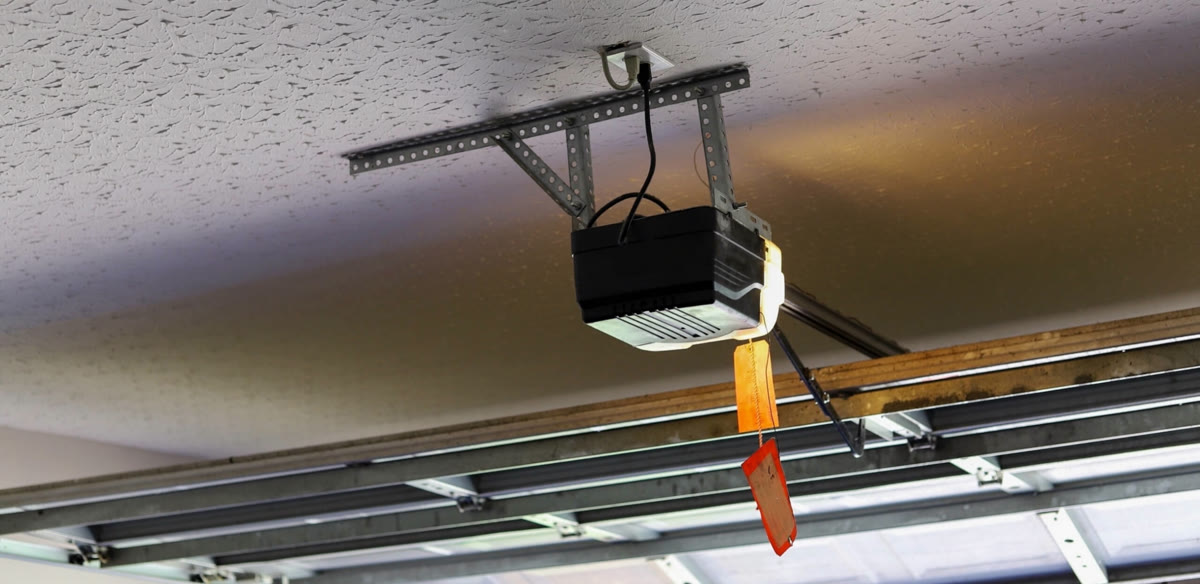
Opener problems fall into a few recognizable patterns, and naming the pattern correctly saves time for everyone. The motor runs but the door does not move. The remote or the outside keypad stops working while the wall button still works. The door starts to close, then reverses and the opener light flashes. The unit makes grinding, rattling, or buzzing noises. Or the chain or belt hangs loose, jerks, or slips as the door travels.
Each pattern points to a different part of the system. A running motor with no movement suggests the trolley is disengaged or a drive gear has worn smooth. A dead remote with a working wall button points to batteries, programming, or the receiver. A reversing door is usually the safety sensor system doing its job because it thinks the opening is blocked, or because a sensor is misaligned. Grinding often means worn internal gears. A loose chain or belt can be a tension issue, a stretched drive, or wear in the sprocket.
There is also an important overlap to understand. Sometimes the opener is not the root problem at all. If a spring has broken or the door has gone badly out of balance, the opener is suddenly trying to lift far more weight than it was designed for, and it may strain, stop, or shut down to protect itself. Treating that as a simple opener fault misses the real cause. If the door feels very heavy by hand, read our page on garage door spring repair before running the opener again.
What can you safely check yourself first?
A short checklist can rule out the simplest causes, and none of these steps involves opening the opener housing or touching the spring system. Work through them in order and note the result of each one.
- Check power. Confirm the opener is plugged in, look for a tripped breaker, and check whether the outlet works with another device. Many openers plug into a ceiling outlet that is easy to overlook.
- Try the wall button. If the wall control works but the remote does not, the opener itself is probably fine and the fault is in the remote, its battery, or its programming.
- Replace remote and keypad batteries. Weak batteries are the single most common reason a remote range gets shorter and then fails completely, and cold weather makes weak batteries worse.
- Look at the sensor eyes. Near the floor on each side of the opening are small photo eye sensors. Wipe the lenses, remove anything blocking the beam, and check that both sensor lights are on and steady. A blinking light usually means misalignment.
- Check the emergency release. If the red release cord was pulled, the trolley may still be disengaged. Follow the instructions printed on your opener to re engage it, usually by pulling the cord toward the door and running the opener until it clicks back in.
- Look for an obvious obstruction. Stored items, a broom handle, or packed snow at the threshold can all trigger the safety system.
If the door moves normally after one of these checks, you may not need a visit at all. If nothing changes, or the opener makes strained or grinding sounds, stop testing it. Repeated attempts can turn a worn gear into a failed motor. That is the point to bring in a provider through our Spokane garage door repair service, where your request is reviewed and matched with a local provider.
When should you stop troubleshooting and call a provider?
Call a provider when the problem involves anything under tension, anything electrical inside the unit, or any symptom that suggests the door itself is unbalanced. Burning smells, sparking, a motor that hums but never turns, a snapped chain or belt, and a door that will not stay up when lifted by hand are all stop and call signs. So is any problem that returns within days of seeming to fix itself, because intermittent faults tend to be failing parts rather than settings.
You should also avoid adjusting the spring system or the opener force settings to compensate for a heavy door. Raising the force setting can make the opener push through a real mechanical problem, which risks bending the top panel and creates a safety hazard if the door later fails to reverse when it should. A provider will test the balance of the door first, then look at the opener, which is the correct order for a lasting repair.
Regular care reduces how often you face these faults. Lubrication, balance checks, sensor tests, and hardware tightening are covered on our garage door maintenance page, and many homeowners book that kind of visit once a door starts getting noisy rather than waiting for a breakdown.
What are the main types of garage door openers?
Knowing which type you have helps you describe the problem and helps a provider bring the right parts. Chain drive openers use a metal chain similar to a bicycle chain to pull the trolley along the rail. They are common, durable, and usually the noisiest option, which matters if there is a bedroom above the garage. Belt drive openers use a reinforced rubber belt instead of a chain. They run more quietly and smoothly, and they are a popular choice for attached garages.
Screw drive openers turn a long threaded rod that moves the trolley. They have fewer moving parts in the drive itself, but performance can change with temperature because the lubricant on the rod thickens in cold weather, a real consideration during Spokane winters. Wall mounted openers, sometimes called jackshaft openers, sit beside the door on the torsion shaft rather than on the ceiling. They free up ceiling space and are often paired with taller doors.
Smart openers add WiFi control, phone alerts, and the ability to check whether the door is open or closed from an app. Those features are convenient, but the core job is unchanged, and a smart unit still depends on healthy springs, cables, sensors, and a balanced door. When a smart opener reports errors, the fault is often mechanical rather than digital, so the same basic checks still apply.
Should you repair or replace the opener?
We do not publish prices, and the right choice depends on the age and condition of your unit, the part that failed, and the provider who quotes the work. Repair tends to make sense when the failure is isolated, such as a sensor pair, a remote, a gear kit, a capacitor, or a travel setting, and the motor is otherwise quiet and strong. Replacement becomes more sensible when the motor or main board has failed, when the unit is older and parts are harder to source, when it is very noisy, or when it lacks current safety features such as reliable auto reverse and photo eye sensors.
Think about the door as a system as well. Putting a new opener on a door with tired springs and worn rollers gives you a new motor doing extra work from day one. A good provider will check balance and hardware as part of an opener visit and tell you honestly if other work should come first. When you submit a request, mention the approximate age of the opener if you know it, the type of drive, and the exact symptom. That information helps the provider advise on repair versus replacement before anyone commits to a course of action.
How does our referral service work for opener repair?
First, describe the issue on our contact form. Say whether the wall button works, what the sensor lights show, and what sounds the unit makes. Second, we review your request and try to match it with a local provider that handles opener repair in the Spokane area. Third, the provider contacts you and handles diagnosis and repair directly.
We connect you with local garage door providers serving the Spokane area, and providers in our network may include licensed professionals. Depending on availability, you may be connected with a highly rated local provider. We do not perform the work ourselves, and we do not promise a specific arrival time, because providers set their own schedules. What we do is make sure your request, with the useful detail you provided, reaches a provider who works on openers.
Frequently Asked Questions
The trolley may be disengaged after the emergency release cord was pulled, the drive gear may be worn, or the chain or belt may have come loose. Check that the release cord is reset first. If the motor still runs without moving the door, a provider should inspect the drive system.
Dead batteries are the most common cause, followed by a lost connection between the remote and the opener. Try fresh batteries first. If neither control works while the wall button does, the issue may be in the opener receiver or logic board.
That is often the safety sensors. If the photo eye sensors near the floor are misaligned, dirty, or blocked, the opener thinks something is in the way and reverses the door. Check for objects, wipe the lenses, and look for a steady light on each sensor.
Grinding, rattling, or a loud hum without movement usually points to worn gears, a worn drive, or a motor working against a door that is out of balance. Stop running the opener repeatedly and have it inspected so a small part failure does not become a full motor failure.
Repair often makes sense when the problem is a sensor, remote, gear, or setting and the opener is otherwise sound. Replacement is worth considering when the unit is older, noisy, lacks modern safety features, or has a failed motor or board. A provider can explain both options for your door without obligation through our service.
Yes. Cold can thicken lubricant, make a door stick to a frozen floor seal, reduce battery performance in remotes, and make older electronics less reliable. If problems appear mainly on cold Spokane mornings, mention that pattern in your request.
Check that the opener has power, try the wall button, replace remote batteries, and look at the sensor lights near the floor. Note what works and what does not. That simple detail helps us match you with a provider who handles opener faults.
Ready to request opener repair?
Send us the symptom, what you have already checked, and whether the wall button works. We will review your request and try to connect you with a local provider who can diagnose the opener properly.