
Garage Door Cable Repair in Spokane, WA
Garage door cables carry the lifting force from the springs to the door itself. If a cable frays, snaps, or slips off its drum, the door can hang crooked, jam, or fall on one side. Do not keep using the door and do not try to rewind a cable yourself. We connect you with local providers who replace cables safely. Request service through our form and describe what you can see.
What do garage door cables do?
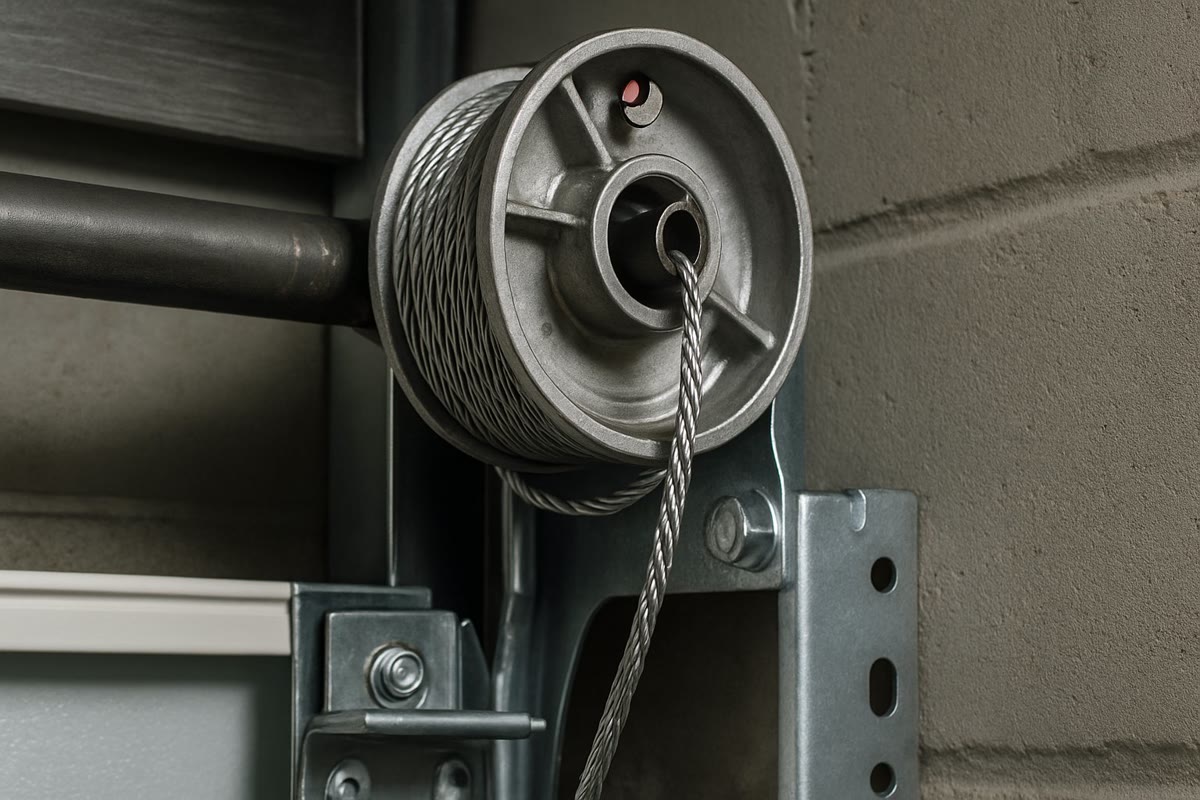
Cables are the link between the springs and the door. On a torsion spring system, each cable attaches to the bottom corner of the door, runs up the side, and wraps around a grooved drum at the end of the spring shaft. As the spring unwinds, it turns the shaft and drums, the cables wind neatly into the grooves, and both sides of the door lift together at the same speed. On an extension spring system, cables and pulleys carry the stretching force of the springs to the door in a similar balanced way.
That balance is the whole point. Two cables, one on each side, share the load and keep the door level as it travels in the tracks. The cables are steel, made of many thin strands twisted together, which gives them strength and some flexibility. But steel strands fatigue, rust, and fray over time, especially near the bottom bracket where the cable meets road moisture, melting snow, and grit from the garage floor.
When one cable weakens, the system stops being balanced. The good side lifts while the weak side lags, the door twists slightly in the opening, rollers bind in the tracks, and panels can rub or crack. That is why cable problems should never be treated as minor, and why a request for garage door repair across Spokane that mentions a crooked door will usually point a provider straight to the cables, springs, and drums.
What are the signs of cable failure?
Cables often warn you before they fail completely, and the warning signs are visible from floor level without touching anything. Watch for the following.
- Fraying, where individual strands stick out from the cable like wire whiskers, most often near the bottom of the door.
- Rust or a rough, discolored cable surface, especially on the lower section that sits near the floor.
- The door hanging crooked, with one side lower than the other when closed or partly open.
- A cable hanging loose beside the door, or a cable sitting beside its drum instead of wrapped in the grooves.
- A loud snapping or popping sound, followed by the door dropping on one side or jamming at an angle.
- The door shaking, jerking, or scraping as it moves, because the two sides are no longer lifting evenly.
- Slack cable piled near the drum or track after the door closed on an object or hit something while closing.
If you see fraying, treat it as a repair that should happen soon rather than someday. A frayed cable has already lost part of its strength, and the strands that remain are carrying more load than they should. If the cable has already snapped or come off the drum, stop using the door entirely. Running the opener on a door with one working cable twists the door further and can pull rollers out of the track.
Why is cable work dangerous to do yourself?
Cables do not work on their own. They are part of a system held under spring tension, and that tension is present even when the door is closed and nothing is moving. To replace a cable, tension has to be controlled while parts are removed and refitted. Let a winding bar slip or loosen the wrong fitting, and the stored energy in the spring can release in an instant, spinning hardware and snapping cable across the garage.
There is a second risk that is easy to miss. A door with a failed cable is no longer supported evenly. It can shift or drop on the unsupported side while you are working beside it. Professional providers secure the door, control the spring tension with proper tools, and replace cables as part of rebalancing the whole lifting system. They also set cable tension evenly on both sides and test the door through full cycles before reconnecting everything.
For those reasons, do not try to rewind a cable onto its drum by hand, do not pull a loose cable tight and pin it, and do not loosen bottom brackets. The bottom brackets are under the highest load in the system and are marked with warnings for good reason. Looking and describing is safe and helpful. Touching the loaded parts is not.
What does cable replacement involve?
A provider starts by securing the door and inspecting the full lifting system, not just the broken cable. The inspection covers both cables, both drums, the spring or springs, the shaft and bearings, the bottom brackets, and the rollers and tracks the door may have twisted against. That matters because cables rarely fail in isolation. A worn drum with a damaged groove can chew through a new cable, and a spring that has lost tension can leave cables slack enough to jump off the drum again.
With the door secured and tension controlled, the damaged cable is removed and a new cable of the correct length and thickness for the door is fitted. Many providers recommend replacing both cables together, since the other cable is the same age and has seen the same moisture and cycles. The new cables are seated in the drum grooves, tension is set evenly on both sides, and the balance of the door is tested by hand. A balanced door lifts level, stays in place when left halfway, and does not drift to one side.
Because cables and springs work as one system, cable visits often overlap with spring work. If the provider finds a tired or broken spring, that is explained in our garage door spring repair page, and the provider will discuss whether it should be handled in the same visit. If the door is jammed open or your car is trapped, our emergency garage door repair page explains how to flag that urgency in your request.
How do cables, springs, and drums work together?
It helps to picture the lifting system as a chain of parts that all depend on each other. The springs provide the force. The shaft transfers that force across the width of the door. The drums at each end of the shaft convert the turning of the shaft into a straight pull. The cables carry that pull down to the bottom corners of the door. If any link in that chain is worn, the others suffer.
A stretched or frayed cable changes the effective length on one side, so the door lifts unevenly. Uneven lifting wears rollers and hinges, bends track over time, and makes the opener work harder on every cycle. A drum with worn grooves lets cable cross over itself instead of winding neatly, which frays the cable and can throw it off entirely. A weak spring leaves the whole system short of tension, so cables go slack at the bottom of travel and can slip their grooves.
This is why a good repair is a system repair. Replacing a cable without checking drum condition, spring balance, and door level may get the door moving again, but it often sets up the same failure to return. When you submit a request, mention any noise, crooked movement, or earlier spring work, since that history helps the provider arrive prepared for the full picture.
What affects the cost of cable repair?
We do not publish prices, because cost depends on your door and on the local provider. Factors include the cable type and length your door needs, whether one cable or the pair is replaced, the condition of the drums, and whether springs or other hardware also need attention. Damage caused by the failure itself, such as bent track or pulled rollers from a door that fell crooked, can also affect the work involved.
The provider matched with your request will inspect the system and give you a quote for your specific door before proceeding. Describing the problem clearly in the form, including whether the door is crooked, whether a cable is visibly off the drum, and whether the door can close fully, helps that provider plan the visit.
How does our referral service work for cable repair?
First, describe the issue on our contact form. Mention fraying, rust, a loose cable, or a door hanging at an angle, and say whether the door is stuck. Second, we review your request and try to match it with a local provider that handles cable and lifting system work in the Spokane area. Third, the provider contacts you and handles inspection and repair directly.
We connect you with local garage door providers serving the Spokane area. Providers in our network may include licensed professionals, and depending on availability, you may be connected with a highly rated local provider. We do not perform the work ourselves. Our role is to make sure your request, with the detail that helps a provider prepare, reaches the right kind of local help.
Frequently Asked Questions
Look for frayed or rusty strands near the bottom of the door, a door that hangs crooked or lifts unevenly, a cable hanging loose or sitting off its drum, and a loud snapping sound followed by the door jamming. Any of these means the door should not be used until it is inspected.
No. With one cable broken or off its drum, the remaining side carries uneven load and the door can twist, fall, or jam in the tracks. Keep the door closed if you can, keep people clear of it, and wait for a provider.
Cables work under spring tension, so changing one means working on a loaded system. Without training and the right tools, releasing that tension by accident can cause serious injury. Cable replacement is a job for a provider with the correct equipment.
Cables are usually the same age and have seen the same conditions, so when one has frayed or snapped the other is often worn as well. Many providers recommend replacing both together so the door lifts evenly and stays balanced.
A cable can leave its drum when tension is lost, which can happen with a broken spring, a door that hit an obstruction, worn drums, or a door that was closed on an object. The provider will find the cause rather than only rewinding the cable, or it may happen again.
Rust from moisture is a leading cause, along with normal flexing over many cycles, contact with a damaged drum, and strain from an unbalanced door. In Spokane, winter moisture, road salt tracked into the garage, and freeze and thaw cycles can speed up corrosion near the bottom of the door.
Cost depends on the cable type, the condition of the drums and springs, whether other parts were damaged, and the local provider. We do not publish prices. The provider matched with your request will inspect the full system and quote for your door.
Ready to request cable repair?
Tell us what you can see, whether fraying, a loose cable, or a door hanging crooked, and we will try to match your request with a local provider who can repair the lifting system safely.